Ceramic Coating vs. PPF: Which One Does Your Car Actually Need?
People ask which one is better as though they are two versions of the same product. They are not. One is a chemical barrier and the other is a physical one, and asking which is better is like asking whether sunscreen beats a helmet. The useful question is which damage you are actually trying to stop.
What a Ceramic Coating Does
A ceramic coating is a liquid polymer that bonds chemically to the clear coat and cures into a hard, glass-like layer measured in microns.
What it stops is chemical and environmental. UV radiation, which at Reno's elevation is the main thing aging your paint. Bird droppings and tree sap, which etch into unprotected clear coat within hours in summer heat. Hard water minerals, brake dust and road film, none of which get the chance to bond to the paint itself.
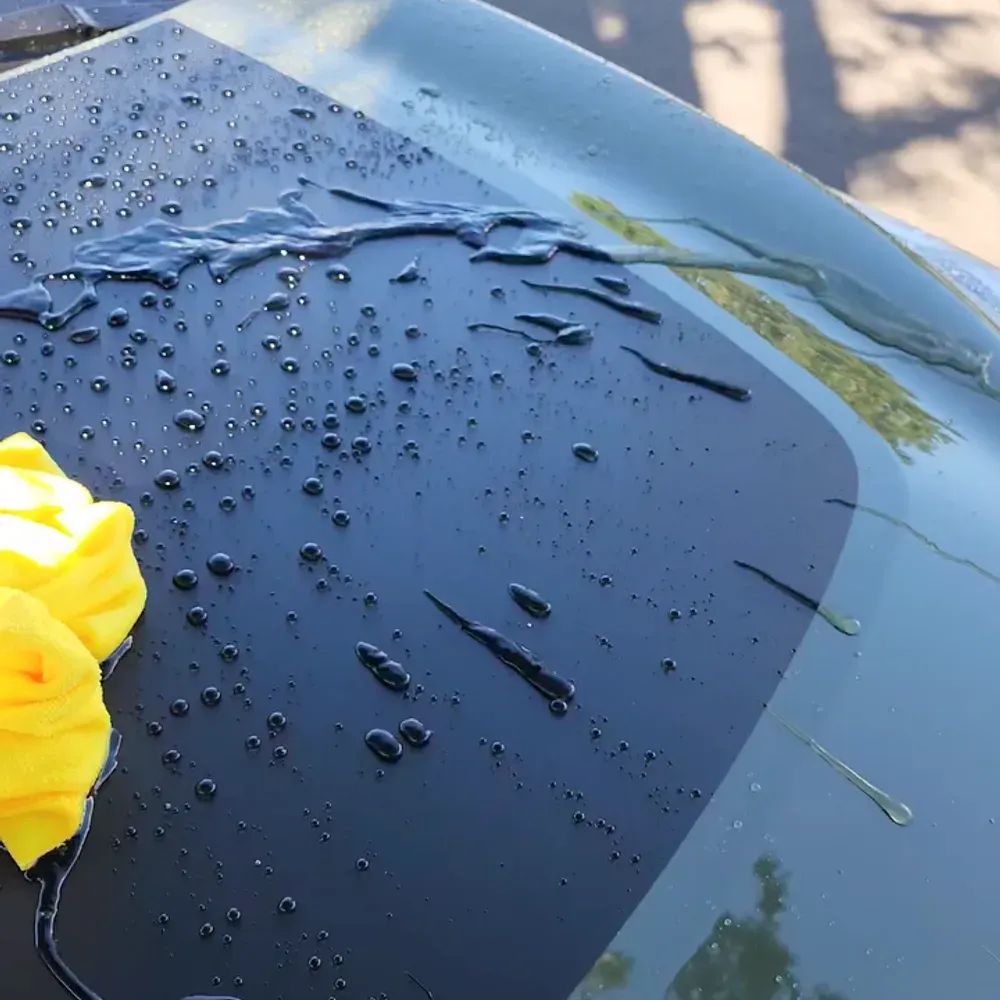
It also changes how the surface behaves. Water beads and sheets off instead of clinging, which is why a coated car stays clean longer and washes in half the time.
What PPF Does
Paint protection film is a thermoplastic polyurethane sheet applied over the paint. It is thick and it is elastic, and those two properties are the entire point.
When a stone comes off a truck on the freeway, the film absorbs and spreads the impact energy across its surface instead of letting it concentrate on one point of clear coat. That is what prevents a chip. Quality film is also self-healing, meaning light scratches and swirl marks disappear from it with heat.
No coating does this. A ceramic coating is hard but it is microscopically thin, and hardness is not what stops impact. Elasticity and thickness are.
The Comparison That Actually Matters
Set side by side, the split is clean.
- UV oxidation and fading: Ceramic coating. Film helps on the panels it covers, but coating covers the whole vehicle.
- Rock chips and road debris: PPF, exclusively. This is not something a coating does.
- Chemical etching from sap and droppings: Ceramic coating.
- Light scratches and swirls: PPF self-heals them. A coating resists them slightly but does not repair them.
- Gloss and easier washing: Ceramic coating, and it is a noticeable difference.
- Whole-vehicle coverage at sane cost: Ceramic coating. Full-vehicle film is a much larger investment.
Why Most Reno Drivers Start With Ceramic
The right starting point depends on where your damage is actually coming from, and in this climate that is usually not the front bumper.
At over 4,500 feet, UV is hitting every horizontal panel on your vehicle every day it is parked outside. Alkaline desert dust settles on it constantly and is abrasive. Hard water spots bake in through the summer. That damage is distributed across the whole car, and it is happening whether you drive or not.
Rock chips, by contrast, concentrate on the front bumper, the hood leading edge, the mirrors and the rocker panels. If you commute the freeway daily and the front end is already stippled, film on those specific panels is money going at the real problem. For most people the whole-vehicle threat is the ambient one.
Running Both
On a vehicle worth protecting properly, these are not alternatives. The standard sequence is film on the high-impact panels, then a ceramic coating over the entire car, film included.
That combination gives you impact protection where impacts happen and chemical and UV protection everywhere. Coating the film also solves a real weakness, because film without a coating can stain and yellow over time and is harder to keep clean.
What the two demand of the paint underneath is not the same, and this is where people get caught out. A ceramic coating is unforgiving. It cures into a clear shell over whatever is there, so swirl marks and etching stay visible and stay put for the life of the coating. Correction first is not optional.
Film is more forgiving. The adhesive layer beds down into fine scratches and fills them, so light swirls and hairline marks stop being noticeable once the film is on. That is not a reason to skip prep entirely, because heavier scratches, etching and oxidation still read through and still want correcting. But it does mean film does not punish you for imperfect paint the way a coating does.
Frequently Asked Questions
Can you put a ceramic coating over PPF?
Yes, and it is common. The film handles impact and the coating on top gives the film UV resistance, hydrophobic behavior and easier cleaning. Use a coating rated for film rather than one intended only for paint.
Does ceramic coating prevent rock chips?
No. A ceramic coating is measured in microns and is hard rather than thick. It resists chemical and UV damage. Stopping a stone at freeway speed requires the thickness and elasticity of paint protection film.
Which should I get first if I can only do one?
It depends on where your damage is coming from. If you commute the freeway daily and the front end is already chipped, film on the impact panels addresses the actual problem. For most Reno vehicles, UV and dust affect every panel every day, which is what a ceramic coating is for.
Do I still need paint correction if I am getting film?
Not always. The film and its adhesive layer bed down into fine scratches and fill them, so light swirls and hairline scratches stop being noticeable once the film is on. Heavier scratches, etching and oxidation still want correcting first. A ceramic coating is the opposite: it seals in whatever is underneath, so correction is not optional there.
What protection services do you install?
Ceramic coating and paint correction are the protection services we install, and every coating includes the correction underneath it and a full aftercare walkthrough.