Mobile Car Detailing vs. a Detail Shop: Which Is Actually Better?
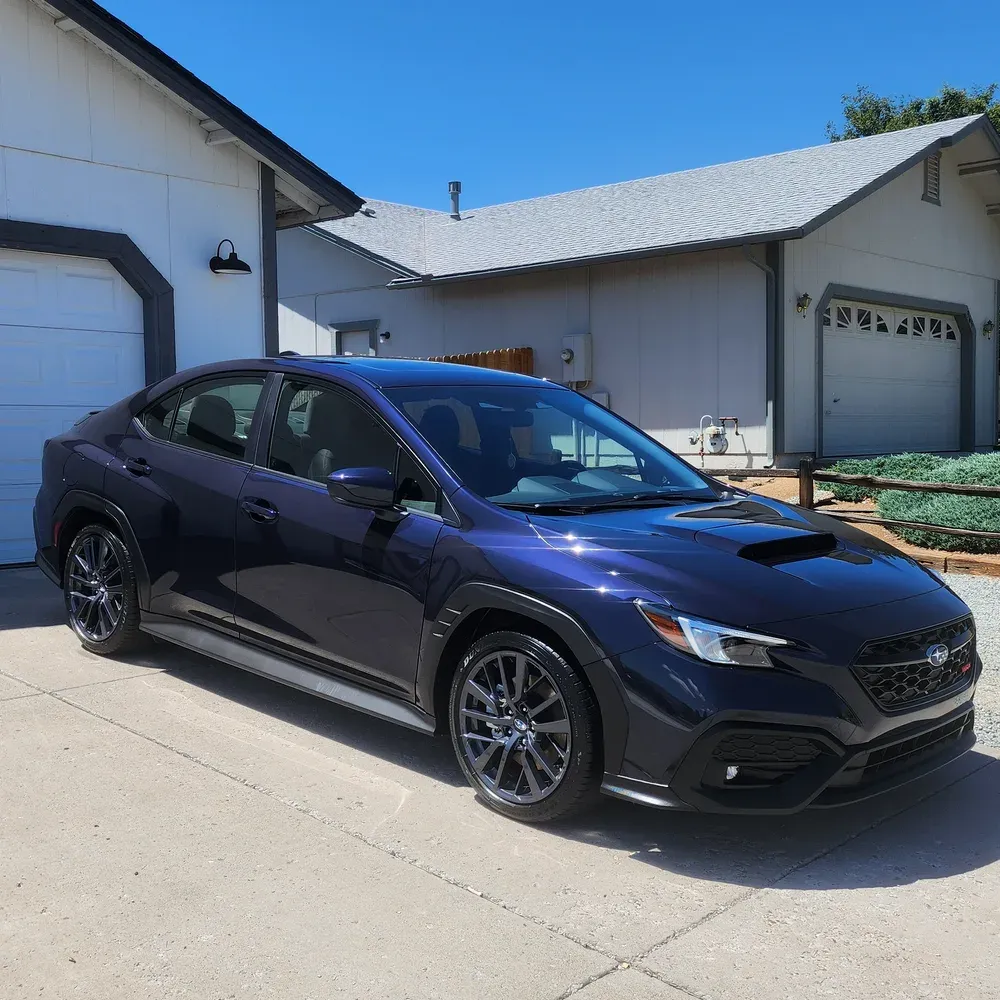
The question is usually framed as convenience versus quality, as though choosing mobile means accepting a worse result. That framing is wrong. What determines the outcome is the equipment, the water and the person holding the polisher. The address is close to irrelevant.
What Actually Determines Quality
A detail is only as good as four things: the water, the chemicals, the tools and the discipline of the operator.
Water matters more than most people realize. Reno tap water is hard, and hard water left to dry in the sun deposits minerals that etch into paint. That is why we carry our own deionized water. It dries spot-free. A shop with a hose and no filtration is worse on this point than a mobile rig that treats its own water.
Tools are the same story. Rotary and dual-action polishers, ultrasonic paint thickness gauges, extraction machines and proper lighting are all portable. None of them require a building.
What Self-Contained Actually Means
The phrase gets used loosely, so it is worth being specific. A self-contained rig brings its own power and its own water supply.
That matters for a practical reason. If a detailer needs your outdoor spigot and your outlet, then the job quality depends on your plumbing and your breaker, and the water hitting your paint is whatever comes out of the tap. We do not work that way, and you should ask anyone quoting you whether they do.
What Mobile Genuinely Solves
The real advantage is not that it is more pleasant. It is that it removes the failure mode where the detail never happens.
A shop appointment costs you a drop-off, a ride home, a wait and a pickup. That is most of a day of logistics on top of the work itself, which is why maintenance schedules slip and cars go six months between washes. In Reno, six months of UV and alkaline dust does real damage.
When the work happens in your driveway while you are inside working, the every-two-weeks maintenance that actually preserves paint becomes realistic instead of aspirational.
Where a Fixed Location Still Has an Edge
There is one honest constraint, and it is worth stating plainly rather than pretending it does not exist.
A ceramic coating needs a minimum of 24 hours in a sheltered environment to cure. A shop has a controlled bay for that. Mobile depends on you having a garage or carport. It is usually not a problem, but if you park on the street with no cover, the timing has to be planned around weather rather than assumed.
Everything else that gets attributed to shops, including lighting and dust control, is a matter of how the operator sets up rather than whether there are walls.
What to Ask Either Way
Whoever you hire, mobile or fixed, the same four questions separate a real detailer from someone with a pressure washer.
- What water do you use? Deionized or filtered water is the only answer that prevents mineral spotting in this climate.
- Do you measure paint thickness? Correcting clear coat without a gauge is guessing with the only layer protecting the paint.
- How long will it take? Anyone offering to correct paint in 45 minutes is filling it with glaze, not correcting it.
- Who is doing the work? On our jobs it is one of the two owners, start to finish.
Frequently Asked Questions
Is mobile detailing lower quality than a shop?
Not inherently. Quality comes from the equipment, the products and the operator. A self-contained mobile rig with deionized water, professional polishers and paint thickness gauges does the same work a shop does.
Do you need my water and electricity?
No. We bring our own spot-free deionized water and our own power. All we need is access to the vehicle and room to work alongside it.
Is mobile detailing more expensive than a shop?
Mobile detailing is often comparable in price to a quality shop. The difference is you never leave your location.
What if I do not have a garage for a ceramic coating?
The coating needs at least 24 hours sheltered to cure. A garage or carport is ideal. If you do not have covered space, tell us up front and we will plan the timing around it rather than coat a car that cannot cure properly.
Can you work at my office parking lot?
Yes, as long as we can park alongside the vehicle and the property allows it. A lot of our work happens while clients are at work.